Golf is more intense on the body than most athletes realize. The biomechanics of golf involve specialized training and focus in order to align all parts of the body for the perfect swing. This involves the shoulders, core, back, neck, and more. If even one part of the body is out of alignment, not only does your swing suffer, but your body starts to compensate in other ways, which can cause pain over time.
Golf swing pain most often occurs due to repetitive movements. Instead of one major injury taking a golfer out, it’s a series of repetitive motions over time that worsen until they cannot be ignored. Golfers may not even know their body is compensating because bodies naturally adapt to protect weaker movements.
If your golf swing is causing you pain, a TPI evaluation could help. Titleist Performance Institute Assessments are completed by trained practitioners, like the chiropractors at Elite Chiropractic and Sport, to evaluate specific golf movements to find areas that are prone to injury. With a TPI assessment, you can improve your golf swing pain and your distance. Stop fighting the pain and get a professional TPI evaluation and see how far your game can go.
What Is a TPI Evaluation
A TPI evaluation is a professional assessment by a trained practitioner that specifically analyzes precise and minute golf movements. Unlike working with a golf pro for skill training or visiting a general sports chiropractor, a TPI assessment specifically analyes golf related movements with a 16-point physical screening.
The areas analyzed and evaluated are related to strength, mobility, stability, core strength, and posture. Prone to injury areas like the core, knees, back, neck, shoulders, wrists, and hips are all examined. Trained TPI practitioners notice the areas that are weaker, compensating, or prone to injury.
The TPI assessment looks at the physical limitations of the body vs the skills being performed. Golfers are then given a personalized treatment plan that helps to protect weaker areas or areas prone to injury. Even small movements can compensate for bigger issues, leading to injury or persistent pain if corrections are not implemented.
How TPI Assessments Can Help with Golf Swing Pain
Stability
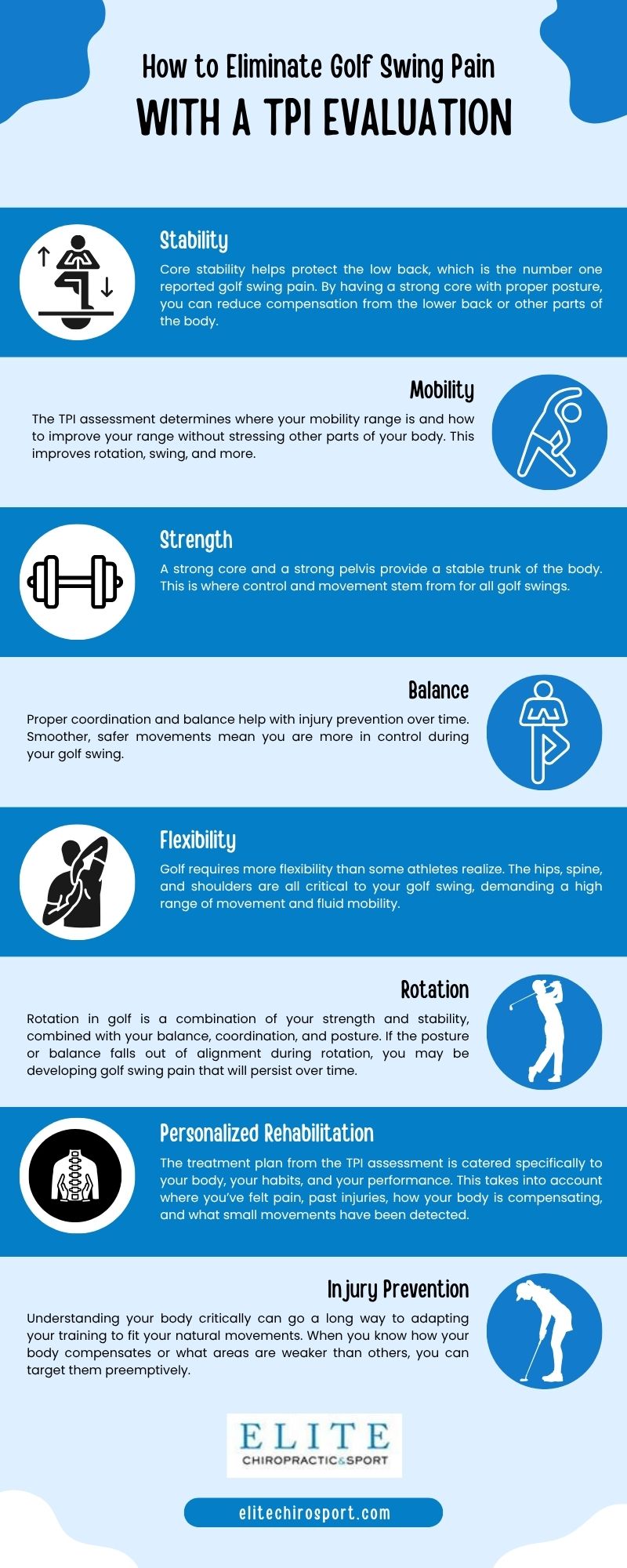
Stability is critical when it comes to your golf swing. Core stability helps protect the low back, which is the number one reported golf swing pain. By having a strong core with proper posture, you can reduce compensation from the lower back or other parts of the body. This allows for more controlled and balanced rotation, reducing common low back pain in golfers.
Mobility
The TPI assessment also evaluates mobility and its role in golf swing pain. Naming your physical limitations with mobility can help avoid golf swing pain in the lower back, shoulders, and elbows over time. Our Elite chiropractors will use the 16-point assessment from the TPI to determine where your mobility range is and how to improve your range without stressing other parts of your body.
Strength
Related to stability, core strength is important to protect against golf swing pain. A strong core and a strong pelvis provide a stable trunk of the body. This is where control and movement stem from for all golf swings. If your core or pelvis is too weak to provide a stable base for the swings you are aiming for, you will feel more golf related pain.
Balance
All golfers need to hone their balance and coordination. Proper coordination and balance help with injury prevention over time. Smoother, safer movements mean you are more in control during your golf swing. A less balanced and coordinated golf swing can lead to injury and body stress. A TPI assessment analyzes the balance and coordination on small, minute levels to detect imbalances early.
Flexibility
Golf requires more flexibility than some athletes realize. The hips, spine, and shoulders are all critical to your golf swing, demanding a high range of movement and fluid mobility. Flexibility exercises that target these areas can help reduce golf swing pain and improve injury prevention over time. Detecting your current range of flexibility in high-use areas of the body allows you to understand where improvements can be made.
Rotation
You may think you have proper posture for your golf swing, but you may lose it during rotation. Rotation in golf is a combination of your strength and stability, combined with your balance, coordination, and posture. If the posture or balance falls out of alignment during rotation, you may be developing golf swing pain that will persist over time. A TPI evaluation helps with golf swing pain by specifically analyzing what happens to your body during the golf swing rotation. Catching these flaws in the movement can lead to highly effective treatment plans, both for pain and distance.
Personalized Rehabilitation
At the end of your TPI assessment, you are provided a personalized treatment plan that will be executed by your Elite sports chiropractor. The treatment plan from the TPI assessment is catered specifically to your body, your habits, and your performance. This takes into account where you’ve felt pain, past injuries, how your body is compensating, and what small movements have been detected. You’ll have hands-on adjustments, at-home physical therapy exercises, and tips to take back to your golf pro to improve your swing and performance in real time.
Injury Prevention
For golfers who are not currently experiencing golf swing pain, a TPI assessment can help with injury prevention. Understanding your body critically can go a long way to adapting your training to fit your natural movements. When you know how your body compensates or what areas are weaker than others, you can target them preemptively. Avoid common golf swing injuries like lower back pain, Golfer’s elbow, shoulder pain, including the rotator cuff, knee pain from improper balance, and neck pain. Get ahead of the injuries and protect your body for a lifetime of games.

Elite Chiropractic and Sport Golf Chiropractors
At Elite Chiropractic and Sport in Columbia, MD, Dr. Josh Bross is a certified sports chiropractor and TPI practitioner. His years of experience working with athletes have allowed him to create custom, personalized treatment plans that help athletes go further. Golfers benefit from his attention to detail, experience with golf injuries, personalized treatment plans that work for any training schedule, and knowledge of the body and spinal movements.
With a golf TPI assessment for golf swing pain, you can avoid injuries that take other athletes out of the game or lower their distances. Take a proactive approach to getting ahead of injury. We are here to help you go further, surpass the distance, and improve your game. We respect what you do, and are here to help you do it better. So take care of your body, not just your skill.
Schedule online today or learn more about the golf TPI assessment in Columbia, MD and our overall sports chiropractor services.
Frequently Asked Questions
What causes golf swing pain?
Golf swing pain is caused by repetitive movements. Often, it is small movements that compensate for weaker or underperforming areas in the body. Over time, these compensations strain areas like the lower back, shoulders, and elbows, resulting in golf swing pain.
What is a TPI evaluation for golf swing pain?
A TPI evaluation includes a 16-point physical screening that assesses strength, mobility, stability, posture, and movement patterns in key areas such as the core, hips, shoulders, knees, and spine. It specifically analyzes golf swing movements to detect areas in the body that need improvement or could be prone to injury.
How does a TPI evaluation help reduce golf swing pain?
A TPI evaluation identifies physical limitations and imbalances that cause compensation during the golf swing. Your chiropractor then provides a personalized treatment plan to correct these issues, reducing pain and improving performance. More than a general physical or chiropractor appointment, it specifically looks at golf swing performance.
Can a TPI assessment help prevent future golf injuries?
Yes, a TPI assessment can detect weaknesses and imbalances early, allowing golfers to address them proactively and reduce the risk of common injuries like lower back pain, golfer’s elbow, and shoulder strain. A TPI assessment is recommended for golfers looking to improve their injury prevention plan.
What happens after completing a TPI evaluation?
After the TPI evaluation, you receive a personalized rehabilitation plan that may include chiropractic adjustments, at-home exercises, and movement corrections to improve your swing, reduce pain, and enhance overall performance. You will meet with your chiropractor regularly to ensure the plan is working and no adjustments are needed.
About the Author

Dr. Bross is the owner of Elite Chiropractic and Sport. He serves as a Certified Chiropractic Sports Practitioner (CCSP) and Certified Strength and Conditioning Specialist. His unique approach to individualized patient care is based on the evaluation and treatment of the “whole” person.
Dr. Bross is a leader in the promotion of health and wellness. He has accumulated an extensive knowledge of the musculoskeletal and nutritional components of the human body. He is skilled in the Graston Technique, Active Release Technique, and Sports Medicine.