Functional movement assessments have been a long-standing practice in most chiropractic and pain management offices. Functional movement assessments (FMAs) help practitioners analyze their patients’ movements to find issues related to injury, stiffness, overextension, and more. FMAs analyze basic movements, posture, and biomechanics of patients to locate sources of pain. It is especially useful for athletes, those prone to injury, or chronic pain sufferers looking for relief.
Before now, FMAs relied solely on human observation to determine variations in the body’s movements. Now, Kinetisense takes functional movement assessments to the next level.
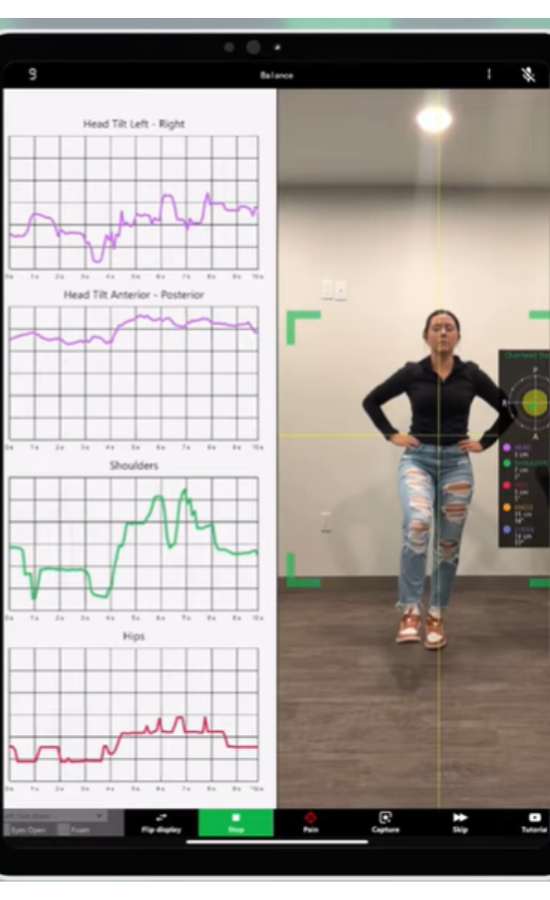
Using AI-technology, Kinetisense can detect movement using a front-facing camera in any setting or environment. An experienced practitioner instructs and leads the patient through a series of movements, and the advanced technology can detect even the smallest differences, hesitations, and compensations. This advancement in movement assessment allows for better treatment plans and follow-up assessments for improvements and adjustments.
Learn why Kinetisense vs traditional functional movement assessments may be the right choice for your treatment plan. With our experienced team at Elite Integrated Health, your movement analysis can be taken to the next level for full-body treatment and long-term pain relief with injury prevention.

Limitations of Traditional Functional Movement Assessments
Until now, traditional functional movement assessments have been key for athletes and chiropractic patients to get their personalized treatment plans. They relied heavily on the skill of the practitioner not only to determine their source of pain but to detect imbalances, limitations, and compensations. Even the most experienced doctors may struggle with detecting imbalances in the body, especially those unrelated to the source of the injury.
While FMAs are extremely useful in seeing some pain relief, the technique leaves gaps where unrelated sources of pain may be left unnoticed, or other areas prone to injury may not be detected. Especially for athletes or chronic pain patients, the body as a whole must be considered to protect and treat. There are simply too many components that go into even one motion for a human to detect them all simply by observing. Some of the limits of FMAs include:
- Too many moving parts
- Reliance solely on human observance
- Repetitive motions may fatigue or agitate the patient
- Limited detection methods
- Gaps in movement detection
- Possibility to miss referred pain sources
- Minute imbalances, compensations, or hesitations may be missed
- Incomplete treatment plan
If all sources of the injury or limitation are not detected, the treatment plan will be inadequate for long-term success. Patients may still face injuries, small imbalances, or setbacks down the line. This is unfortunately true for even the most skilled offices and teams. When it comes to patient treatment, the more information your doctor has, the better.
How Kinetisense Improves FMAs for Both Doctors and Patients
Kinetisense has improved the areas that FMAs have been lacking. Doctors have known that their ability to detect movement is limited without advanced technology. The Kinetisense movement assessment addresses the risks that have hindered treatment plans in the past to provide better care for patients of all severities.
Deeper Evaluation and Analysis
Unlike traditional functional movement assessments, Kinetisense goes beyond human detection and observation. The advanced AI technology allows tracking of even the smallest movements or hesitations. Whether it’s an imbalance, a compensation, or even the first signs of an injury, the technology will flag the movement for deeper evaluation using hands-on manipulation.
Plus, you can move through motions natural to your sport or daily activities. This allows you to act naturally, without worrying about limited space or moving with hands-on assessment that can restrict the range of motion. If you’re worried about it, you can move through it, and the Kinetisense movement assessment will pick up the body’s movement tracking, without having to do it over and over to observe every muscle.
Thorough Treatment Plans
Unlike FMAs, which can be prone to human error, Kinetisense’s movement technology can detect movements your doctor may not be looking for. Spotting unrelated restrictions or injuries can lead to better body mobility and a whole-person treatment approach.
Kinetisense will alert your doctor to any detections that are abnormal. Using hands-on assessments, your doctor can then determine if there is referred pain, a motion that is injuring more than the current muscle, and help with injury prevention and improved performance.
If you’ve ever wondered, “Why can’t I get past this next step?” the Kinetisense movement technology may have the answer.
Progress Tracking
With Kinetisense movement assessments, you don’t need to spend weeks or months trying a new physical therapy regimen and hoping it’s working before seeing results. Because the technology can detect even the smallest movements, unlike traditional FMAs, you can continue using Kinetisense throughout your treatment plan to see how your body is responding.
Oftentimes, the body will compensate, using back muscles to make up for a shoulder injury or putting more pressure on a hip due to ankle pain. Kinetisense and your doctor can catch these problems early, adjusting exercises and hands-on treatment as you go to ensure you’re not developing bad habits or improperly recovering. You’ll feel better, faster, and be able to go further than before.

Getting Started with Kinetisense Functional Movement Assessments
Patients throughout the DMV near Columbia, MD can call Elite Integrated Health to schedule a functional movement assessment using Kinetisense technology. Paired with the expert eye and education of Dr. Josh Bross and staff, patients can receive new levels of care that target long-term recovery and gains.
Whether you’re an athlete looking to improve performance, a chronic pain patient looking for a new treatment plan, or anyone dealing with imbalances and a decrease in quality of life, Kinetisense movement assessment can help.
See the difference in new technology and how a treatment plan made for you can change your life. Stop suffering, accepting limitations, or trying old cures that don’t seem to solve the underlying problem. You deserve more, and the doctors at Elite are available to help. Call now or schedule online.
Frequently Asked Questions
What is the main difference between Kinetisense and traditional functional movement assessments?
Traditional functional movement assessments rely only on a doctor’s visual observation, while Kinetisense uses AI-powered 3D movement screening through a front-facing camera to detect even small imbalances. This detection can catch compensations and hesitations that may be missed by the human eye.
How are traditional functional movement assessments limited?
FMAs depend heavily on human observation, which can miss minute imbalances, referred pain sources, or compensations, especially during complex or repetitive movements. These gaps can lead to incomplete treatment plans and slower recovery.
How does Kinetisense improve pain management treatment?
Kinetisense provides deeper movement analysis by flagging abnormal or subtle movement patterns. This allows doctors to create more thorough, whole-body treatment plans that address underlying issues, improve mobility, and reduce the risk of future injury.
Can Kinetisense track progress during treatment?
Yes. Kinetisense can be used throughout the treatment process to monitor even small changes in movement over time, helping doctors adjust care plans as needed and ensuring patients are improving without developing new compensations.
Who should consider a Kinetisense functional movement assessment?
Athletes, chronic pain sufferers, and anyone experiencing movement limitations or imbalances can benefit from a Kinetisense assessment. Patients in the DMV area near Columbia, MD can schedule an assessment with Elite for personalized, long-term care.
About the Author

Dr. Bross is the owner of Elite Integrated Health. He serves as a Certified Chiropractic Sports Practitioner (CCSP) and Certified Strength and Conditioning Specialist. His unique approach to individualized patient care is based on the evaluation and treatment of the “whole” person.
Dr. Bross is a leader in the promotion of health and wellness. He has accumulated an extensive knowledge of the musculoskeletal and nutritional components of the human body. He is skilled in the Graston Technique, Active Release Technique, and Sports Medicine.